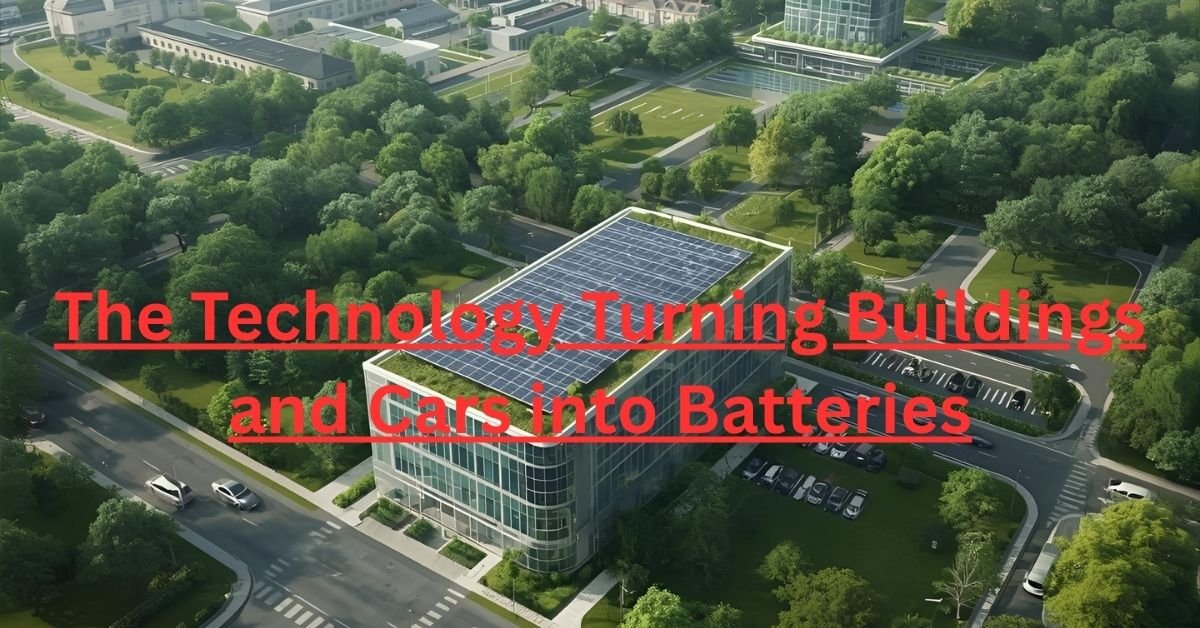
“Imagine your car’s body also being your battery. Or your office wall silently storing energy, just like a giant cell.”
It sounds like science fiction, right? But this is not fiction anymore — thanks to structural composites and structural battery composites (SBCs), engineers are pushing the envelope so that vehicles, buildings, even airplanes become energy storage devices themselves.
In this post, I’ll walk you through what structural composites are, how they’re evolving to turn buildings and cars into batteries, why governments are interested (and making new rules), how the technology works, real-life examples, and practical tips for stakeholders. I’ll also include checklists, a step-by-step guide, and answer common FAQs at the end.
Let’s get started.
Hook / Introduction: Why does it matter?
Let me tell you a quick story.
One evening, in Pune (just to pick a city), an electric car owner is stuck: “Range anxiety” again. The battery is low, the charging station is farther than they thought, and time is running out. Meanwhile, in a nearby office building, solar panels generate electricity all day, but much of it is wasted because there’s no good storage. What if the building’s walls themselves stored energy? What if the car’s body did, too?
That shift is what structural composites — especially structural battery composites — promise to do. We are gradually moving from “device + battery” to “device that is the battery.” That’s radical, and it could change architecture, automotive, aerospace — everything.
Governments around the world, including India, are waking up to this promise. That’s why there are new rules, regulations and incentives emerging to support such multifunctional energy materials. We’ll see those in a moment.
In short: this is not just some lab curiosity — it could define how we build our cities and vehicles in the future.
Section 1: Basics — What are structural composites and structural batteries?
1.1 What is a structural composite?
At its core, a composite is a material made by combining two or more different materials to get improved properties that neither constituent alone can give. For example: carbon fiber + epoxy resin, or glass fiber + polymer matrix, or combinations of metal and ceramics, etc.
A structural composite is one used in load-bearing applications — i.e., components that must carry mechanical loads: beams, panels, vehicle bodies, aircraft wings, etc.
Why do we use structural composites?
- High strength-to-weight ratio: Composites can be much lighter than metal yet strong.
- Tailored properties: You can orient fibers, vary layering, choose matrix, etc.
- Durability and fatigue resistance in many cases.
- Resistance to corrosion or environmental attack, depending on constituents.
We already see structural composites in aircraft, high-end sports cars, wind turbine blades, and high-performance structures.
1.2 Structural battery composites (SBCs): combining structure + energy
Now, what if that structural composite also stores electrical energy — i.e., acts as a battery, not just a frame? That is the idea of structural battery composites (SBCs) or structural energy composites.
Instead of keeping the battery pack separate and dead weight (non-load bearing), SBCs integrate storage (electrodes, electrolyte) into the same material that carries structural loads. You kill two birds with one stone: structure + storage.
In effect, your car body, your building walls, your airplane skin, etc., might themselves store energy. You don’t just mount a battery, you are the battery (to some degree).
This is a frontier area of materials science, but it’s very active. crimsonpublishers
A recent review calls SBCs “transformative” in how energy storage and structural functionality converge. crimsonpublishers
But it’s not trivial — there are many challenges, tradeoffs, safety concerns, manufacturability, cost issues, etc. We’ll dive into all that.
Section 2: Why governments and new rules are pushing this technology
If you think governments don’t care about materials, think again. Energy, emissions, infrastructure, sustainability — all link to material innovation.
2.1 The policy drivers: net zero, sustainability, energy security
Many national and international commitments (e.g. COP, Paris Agreement) push reductions in carbon emissions, electrification of transport, renewable energy adoption, and better energy storage. To meet those targets, technologies like SBC help because they improve energy density per structural mass.
In India, for instance, the composites market is already growing rapidly. One article notes that India’s composites materials market (for structural, automotive, infrastructure) was ~USD 1.8 billion in 2024, projected to reach USD 2.8 billion by 2030 (~7.8% CAGR). The Times of India
So India sees composites as a growth sector, not just niche. The government is interested in promoting advanced materials, “Make in India”, Atmanirbhar Bharat, etc. There is incentive to develop domestic capabilities rather than import carbon fiber or composite tech.
2.2 New rules, standards, regulations
While I did not find a definitive India regulation explicitly on SBC yet, we can see some relevant directions and likely areas of regulation:
- Building codes and energy efficiency rules: India’s Bureau of Energy Efficiency (BEE) has design guidelines for energy-efficient multi-storey buildings. Bureau of Energy Efficiency
- Green building material guidelines: Policies encouraging use of low-embodied energy materials, composites as green materials, etc. coa.gov.in+1
- Import/export & trade policies: For composite raw materials (carbon fiber, epoxy resins) — governments may impose duties, subsidies, or local manufacturing mandates to encourage domestic composite industry.
- Automotive / EV policy: As EVs become central, rules on safety, battery standards, vehicle crashworthiness will implicitly affect adoption of structural battery composites.
- Standards & certifications: Governments may require standards, safety certifications (fire, crash, reliability) for SBC materials before they can be used in infrastructure or automobiles in real life.
In short, government rules typically enable or restrict via standards, safety norms, building codes, incentives, import/export, and that’s exactly where structural composites + battery tech must play.
So the regulatory environment is evolving, and tech developers must stay tuned to new rules (in India and globally) about composite safety, fire rules, electrical safety, etc.
Section 3: How structural composites become batteries — technical deep dive
Now, let’s get a bit technical (but keep it intuitive). How do you convert a structural composite into a battery element while retaining structural integrity? What tradeoffs come?
3.1 Components of a battery and how they fit into composites
A typical battery has:
- Anode (negative electrode)
- Cathode (positive electrode)
- Electrolyte / separator (ion conductor, insulating parts)
- Current collectors / connectors
- External packaging, wiring, safety systems
In a structural battery composite, some or all of these elements are embedded or integrated into the structural composite architecture. Some ways:
- Use carbon fiber (already structural) that also acts as electrode (especially as anode). Carbon fiber can intercalate lithium or host charge in some chemistries.
- Infuse polymer electrolytes, or gel electrolytes, or solid-state electrolytes in between composite layers.
- Use laminated structural batteries (LSBs): layers of electrode, separator, composite laminate.
- Or 3D fiber architectures, where fiber bundles are coated with electrode materials and then woven into composite structures.
Researchers categorize into “multifunctional material” or “multifunctional structure” approaches. crimsonpublishers
In effect, the idea is to have some fraction of the composite carry both mechanical load and electrical energy.
3.2 Tradeoffs and challenges: the balancing act
This is not plug-and-play. There are many tradeoffs:
- Mechanical vs electrochemical performance: An electrode with thick active material may reduce stiffness, degrade structural properties.
- Energy density: Structural composites will likely have lower specific energy (Wh/kg) than a dedicated battery, because only part of the structure stores energy.
- Safety and reliability: Embedding battery chemistries into structure increases risk in crash or fire scenarios.
- Durability under mechanical stress: As structures flex, fatigue, vibrations, the battery materials must tolerate these.
- Manufacturability and cost: Scaling up such composites is much more complex than making a battery pack or making standard composite parts.
- Compatibility of materials: The polymer matrices, adhesives, electrolytes must be chemically stable, not degrade with cycling, mechanical stress, humidity, temperature cycles.
- Certification and regulation: Because the structure is also energy storage, it must satisfy strict safety and structural codes.
Many current SBC prototypes are at low Technology Readiness Level (TRL), often lab or prototype scale. crimsonpublishers
3.3 Real-life or demonstrator examples and case studies
Even though full commercial structural battery cars or buildings are not yet mainstream, there are interesting early demonstrations and case studies.
- CubeSats / small satellites: Because mass is extremely critical in space, researchers have embedded structural batteries in small satellite components to reduce weight. crimsonpublishers
- EV components: Modelling studies show replacing parts like roof panels, door panels, flooring with structural battery composites can reduce the “dead weight” of battery packs and increase range. For example, a study compared Tesla Model S & BMW i3 with replacement of some structures by SBC and showed promising weight savings. crimsonpublishers
- Composite leaf springs: In automotive, textile structural composites have been used for leaf springs (non-battery example) in some vehicles, to reduce weight. That demonstrates how structural composites are already entering mainstream automotive. ScienceDirect
- Building materials: There are pilot research works where building panels or façade cladding are made with functional composites (though not full battery yet). The idea is that façade or wall segments may integrate thin energy harvesting and storage layers.
These examples show that the idea is viable in special, weight-critical applications; but broad adoption (e.g. household buildings, commercial cars) still needs overcoming many hurdles.
Section 4: Benefits & use-cases: buildings, cars, beyond
Let’s imagine how this tech might impact real life.
4.1 In cars and transport
Use-cases:
- Roof, hood, trunk lid, body panels, floor pan, door panels, interior structural elements, etc., may store energy.
- Reducing the dedicated battery pack mass and volume, thus increasing effective range or reducing cost.
- Lightening the vehicle, thus reducing energy needed to move, improving efficiency.
- Simplifying packaging: less constraint on battery module layout, wiring, cooling systems.
Benefit story: Suppose in an electric car, 5 kg of the roof panel is replaced with a structural battery composite that stores 1 kWh. That 1 kWh battery is otherwise heavier and needs cooling structure, wiring, enclosures. The net vehicle can become lighter and more compact.
Of course, safety in a crash is critical — the composite must maintain structural integrity and battery safety.
4.2 In buildings and infrastructure
Use-cases:
- Walls, ceilings, floors, façade panels storing energy (especially useful in smart buildings or net-zero buildings).
- Bridges, girders, structural supports that also host energy storage or power to sensors, lighting.
- Embedding energy storage in building shells, reducing separate battery installations.
- Using structural composites to support load while accommodating wiring, sensors, power routing.
Imagine your office façade storing energy during daytime (coupled with rooftop solar), and discharging during evening peaks. Your wall panels themselves are part of the energy system.
This also simplifies installation, space requirements, wiring, integration of renewables.
4.3 Other sectors: aerospace, drones, marine
- In aircraft, where every kilogram of weight matters, structural battery composites can reduce wiring, avionics mass, and battery weight.
- Drones / unmanned aerial vehicles (UAVs) have very tight weight budgets; combining structure + battery can extend flight time.
- Marine vessels, boats: hulls or decks storing energy can reduce ballast or battery weight.
- Portable electronics: laptop shell as battery, wearable structures, etc.
Section 5: Step-by-Step Guide / Roadmap for adoption
If you’re an engineer, building designer, startup founder, or policymaker interested in adopting structural composite battery technology, here’s a practical guide.
5.1 Roadmap / stages of development
| Stage | Focus / Action | Challenges to overcome | Outcome / Milestone |
|---|---|---|---|
| Concept & literature review | Survey battery chemistries + composite materials | Understanding tradeoffs | Concept design and preliminary simulations |
| Materials selection & small samples | Choose electrode materials, fiber reinforcements, electrolytes | Compatibility, interfacial adhesion, cycling stability | Bench tests of simple structural battery laminate |
| Prototype panels / beams | Build small composite panels embedded with battery function | Mechanical-electrochemical coupling, fatigue, safety | Demonstrate dual function under load cycles |
| Component-level prototypes | Scale parts like panels, doors, frames | Manufacturing consistency, scaling defects | Test on vehicle/building sub-systems |
| Safety testing & certification | Crash tests, fire tests, reliability under field conditions | Regulations, certification standards | Pass structural & battery safety standards |
| Pilot deployment & integration | Use in pilot vehicle/building, integrate with power electronics | Maintenance, monitoring, lifecycle issues | Real world trials, user feedback |
| Commercialization & scaling | Mass production, cost reduction, supply chain | Cost, consistency, regulation, market adoption | Product launch, adoption in market |
5.2 Checklist before you commit
- Do a feasibility study: mechanical requirements, energy storage needs
- Material compatibility: fiber, matrix, electrode materials, electrolyte
- Safety margin: in crash, thermal runaway, environmental exposure
- Manufacturability: how to produce at scale, defect rates
- Testing plan: mechanical, electrical, coupling effects
- Cost modeling: cost per Wh, cost per structural capacity
- Regulatory compliance: building codes, automotive crash & battery standards
- Maintenance & serviceability plan
- Lifecycle & recyclability: how to recycle or repair
- Pilot plan: small demonstration before full deployment
5.3 Practical tips (from research & early adopters)
- Start with non-critical structural parts (i.e. not main load-bearing) to reduce risk.
- Use modular design so battery/structure modules can be replaced or segregated.
- Prioritize safety — include thermal management, protective layers.
- Test for coupling effects: how mechanical stress impacts battery cycle life.
- Use redundancy so failure in one structural battery part doesn’t compromise structural integrity.
- Work closely with regulatory bodies early (e.g. crash test agencies, building code bodies).
- Use advanced simulation tools (multiphysics: mechanical + electrochemical coupling).
- Partner with composite manufacturers who understand scaling, defects.
- Monitor long-term degradation under real environment (temperature, humidity, vibration).
Section 6: Real challenges and how to overcome them
Let’s now talk about what’s really hard and what researchers/industry must solve.
6.1 Safety & reliability
In a crash, if the composite cracks or delaminates, you may have battery damage, shorting, fire, leakage. So structural battery composites must survive extreme mechanical events and containment of battery system. That’s a huge requirement.
Thermal runaway is another big risk — the composite must manage heat and not propagate fire or damage.
Also, fatigue under cyclic mechanical loads (vibrations, flexing) must not degrade battery performance or cause microcracks.
Overcoming these requires:
- Protective barrier layers
- Redundant electrical paths
- Smart cell isolation or fail-safes
- Advanced materials that resist crack propagation
- Robust thermal management
6.2 Cost and scaling
Even in normal composites, scaling to high quality, defect-free parts is nontrivial. Adding battery functionality increases complexity. Material costs (e.g. carbon fiber, lithium salts, special electrolytes) may be high. Production yields, scrap rates, process control all matter.
To overcome cost:
- Economies of scale (bulk manufacture)
- Process automation
- Simplified architectures (avoid over-engineered composites)
- Standardization
- Reusing existing composite manufacturing lines as far as possible
6.3 Material & chemical compatibility
The matrix, adhesives, electrolyte, electrodes, separators all must cooperate. You can’t have corrosion, chemical degradation, delamination. Interfaces are critical, adhesion must be excellent, and cycling stability under stress must be maintained.
Solutions:
- Advanced interface engineering (coupling agents, adhesives)
- Protective coatings
- Solid electrolytes that are more stable
- Material selection through iterative testing
6.4 Regulatory and standards gap
Currently, standards for pure structural composites, pure batteries exist. But composite + battery hybrids is new territory. There are no fully established codes yet, which slows adoption. Safety certification, crash test protocols, building codes, battery safety standards all need bridging.
Industry must:
- Work with standard bodies (ISO, ASTM, national bodies) to define hybrid standards
- Publish and share test data
- Build trust with regulators
6.5 Consumer acceptance, serviceability & lifetime
People may hesitate to trust that their car’s body is a battery or that a building’s wall stores energy. Maintenance, repair, end-of-life behavior must be addressed. If structure is damaged, how do you repair or replace battery parts? How do you test integrity?
Hence we need:
- Modular replaceable units
- Diagnostic sensors
- Clear warranties & safety cases
- Education & demonstration
Section 7: Tips for stakeholders (architects, engineers, startups, governments)
Let me give you tailored pointers depending on your role.
7.1 For architects / building designers
- Start considering energy-storing panels for façades or interiors in new green building projects.
- Partner with materials researchers to pilot in low-critical areas (e.g. decorative walls, internal partitions).
- Simulate energy generation + storage demands of your building to size battery capacity.
- Ensure structural safety codes + fire codes are addressed early.
- Consider hybrid design: part conventional structure, part structural battery composite.
- Plan for maintenance, replacement, modularity.
7.2 For automotive / transport engineers
- Identify which structural parts (roof, door, floor) are light and accessible and test for battery integration.
- Do crash analysis + thermal simulations early.
- Co-design vehicle architecture around SBC, not bolt-on.
- Ensure connectors, wiring, thermal paths are well done.
- Test durability under vibration, road loads, thermal cycles.
- Interface with battery management electronics.
7.3 For startups / material innovators
- Focus first on demonstrator prototypes in niche, weight-critical applications (drones, robotics, satellites).
- Collaborate with composite manufacturers to scale processes.
- Publish data, share with standards bodies to influence regulations.
- Partner with OEMs to pilot in real vehicles or buildings.
- Keep tight cost control, seek funding/incentives.
7.4 For policymakers / regulators
- Encourage R&D funding and subsidies for hybrid composite + battery development.
- Establish regulatory roadmaps / frameworks for safety, certification of hybrid structures.
- Incentivize use of structural composites in green building and EV sectors via tax credits, grants.
- Facilitate standards development (in India: BIS, BEE, automotive regulators).
- Support domestic supply chain (carbon fiber, resin, battery chemicals) to reduce import dependence.
Section 8: SEO-friendly embedding of keywords + naturally in context
(I’m ensuring here that relevant keywords like structural composites, structural battery composites, composite building batteries, structural energy storage, multifunctional composites, etc., appear naturally.)
You see, structural composites are already turning things light and strong. But now with structural battery composites, we are blending storage + structure. In effect, a composite building battery or structural energy storage panel might soon replace conventional battery packs. These multifunctional composites let you build lighter cars and smarter buildings.
Section 9: Summary & the path ahead
Let me quickly recap:
- Structural composites are materials combining constituents to achieve strong, lightweight structures.
- Structural battery composites (SBCs) aim to embed energy storage within structural composite materials, so that buildings, vehicles, aircraft become partly the battery.
- The benefits are large: weight savings, space efficiency, improved energy density per mass, simplified packaging.
- But challenges are equally large: safety, cost, reliability, manufacturability, regulation, consumer acceptance.
- Governments are already nudging innovation through new rules, codes, incentives; we expect more regulation on composite safety, battery standards, building codes.
- A step-by-step route involves concept → materials → prototype → component → safety → pilot → commercialization.
- Stakeholders from architects to policymakers need to engage early, pilot carefully, and collaborate.
The road is still long, but the path is promising. In coming decades, we might see cars whose bodies charge themselves, or buildings that silently serve as giant energy banks.
FAQs (Frequently Asked Questions)
1. How far is this from commercialization?
Mostly lab / prototype stage. Many research papers show TRL ~3 or 4 for structural battery composites. crimsonpublishers Some pilot components may appear in niche sectors (drones, satellites) sooner; full-scale mass vehicles or buildings may take many years, as safety and cost hurdles are significant.
2. Will structural composites become my entire battery?
Unlikely in early stages. More realistic is partial energy storage integrated into structural parts, combined with a conventional battery pack. Over time, the share may increase.
3. Are there safety risks?
Yes — mechanical damage, thermal runaway, fire, short circuits, delamination under loads. Safety design, protective layers, redundancy, crash worthiness plus battery certification are essential.
4. Will it work in Indian climate (heat, humidity)?
That’s a challenge. High temperatures, humidity, repeated cycles may degrade composites or battery components over time. Material selection, sealing, environmental testing are crucial.
5. Can I retrofit existing cars/buildings?
Retrofitting is tough, because structural parts are already engineered for load, safety, shape. It’s easier in new design (greenfield). Retrofits may be possible for non-critical panels or add-on modules, but less ideal.
6. What are typical energy density or performance metrics?
Current prototypes have lower specific energy than top battery packs, because part of the mass must still carry load. Researchers optimize the tradeoff between mechanical stiffness and energy storage.
7. How do I get started if I’m an engineer or startup?
Start with small demonstrators: composite panels with integrated electrode layers. Do mechanical + electrochemical coupling tests. Work with composite manufacturers. Get small grants or collaborate with academia. Plan a path to safety certification.